
Studying in Room Alone vs Crowded Library with Peers
An objective cognitive comparison between studying alone in your hostel room versus reading in crowded university libraries with peer cohorts in Nigeria.

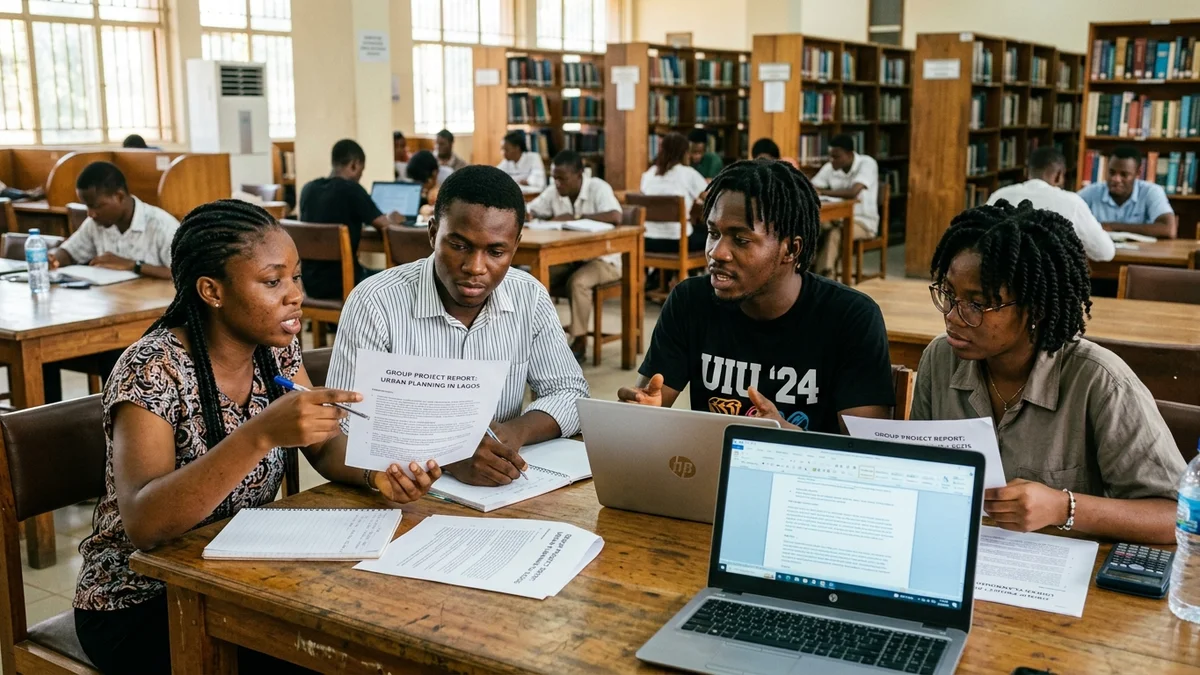
Studying in Room Alone vs Crowded Library with Peers
It is 9:00 AM on a Saturday morning.
You stand by your hostel door with your study backpack packed with textbooks, summaries, and highlighters.
You face a classic student dilemma:
Option 1: Stay locked in your hostel room, close the door, and study alone on your mattress in complete isolation.
Option 2: Walk fifteen minutes under the sun to the University Central Library or Departmental Reading Room, fight for a seat with a functional charging port, and study surrounded by three hundred coursemates.
Both environments have ardent defenders on campus.
Some scholars swear that studying alone is the only way to achieve deep conceptual focus. Others insist that studying in their room always ends in a three-hour accidental nap, and only the intense social pressure of a packed library can force them to read.
Here is the cognitive science and environmental analysis of Solo Study vs. Library Study in Nigerian tertiary institutions.
1. The Environmental Comparison Matrix
| Factor | Solo Room Study | University Main Library |
|---|---|---|
| Acoustic Control | Unpredictable (Roommate chatter, generators) | Generally quiet, though whisper pockets exist |
| Procrastination Risk | Extremely High (Mattress, snacks, phone nearby) | Low (Social contagion; everyone around is reading) |
| Power & Lighting | Dependent on hostel grid or private inverter | Backed by dedicated campus generators and steady lighting |
| Cognitive Freedom | High: Can recite aloud, walk around, use whiteboards | Low: Must sit silently; restricted to written retrieval |
| Social Fatigue | Zero social energy expended | Moderate: Walking past acquaintances, hallway greetings |
Evaluate campus library dynamics in campus library vs hostel study: noise, power, and seating.
2. The Power of "Social Facilitation" in the Library
In behavioral psychology, the Hawthorne Effect and Social Facilitation Theory explain why libraries produce intense productivity:
| Study Environment | Behavioral Conditioning | Resulting Focus & Productivity |
|---|---|---|
| Alone in Hostel Room | Zero social accountability; bed and phone within arm's reach | High risk of impulse scrolling ("5 minutes on Instagram" turns into 2 lost hours) |
| In Packed Library | Social facilitation; surrounded by peers deeply immersed in coursework | Perceived observation mirrors focus; procrastination feels socially awkward; deep work sustained |
When you see fifty other students furiously writing notes, solving engineering equations, and memorizing anatomy diagrams, your brain mirrors their disciplined arousal. Procrastination feels socially unacceptable.
Furthermore, university main libraries in Nigeria usually have prioritized generator fuel allocation, guaranteeing light and fan ventilation during intense daytime heat.
Learn how to manage peer loneliness in campus loneliness in university: causes and recovery.
3. When Solo Room Study Beats the Library
Despite the library's advantages, studying alone is scientifically superior for specific learning phases:
- **Active Vocal Retrieval (Feynman Technique):** You cannot explain quantum mechanics or case law out loud to an empty room inside a silent university library. Solo study allows vocal recitation, which engages auditory memory loops.
- **Flashcard Testing & Kinesthetic Pacing:** Walking back and forth while flipping Anki flashcards activates the motor cortex, boosting retention in kinesthetic learners.
- **Severe Social Anxiety & Hypervigilance:** For introverted or socially anxious students, the feeling of being watched by peers in a crowded hall consumes cognitive bandwidth, leaving less working memory for academic synthesis.
Compare solo learning with group revision in solo studying vs group discussion: when groups harm GPA.
4. The 80/20 Hybrid Protocol
The highest-performing students do not restrict themselves to a single environment. They execute a Bimodal Study Rhythm:
- **Morning Library Block (9:00 AM – 2:00 PM):** Go to the library for heavy, dense information acquisition: reading textbook chapters, summarizing lecture handouts, and solving past question sets. The library's social pressure keeps you locked into deep focus.
- **Evening Solo Sprint (5:00 PM – 8:30 PM):** Return to a quiet room or an empty evening classroom for active recall testing: reciting summaries from memory, drawing pathway diagrams on a whiteboard, and taking timed mock tests.
Match your study environment to your immediate cognitive task, and watch your retention double.
Frequently Asked Questions
Is it better to study alone or in a campus library for university exams?
It depends on the cognitive phase of learning: solo study in a quiet room is superior for dense conceptual encoding and active recall testing. The library is superior for accountability, preventing procrastination, and sustained deep work blocks.
How can you avoid getting distracted by social chatter in campus libraries?
Sit in designated silent individual carrels away from entrance walkways, water dispensers, and large group discussion tables. Wear noise-isolating earphones even without playing music.
Why is studying in a hostel room often ineffective in Nigeria?
Hostel rooms are filled with environmental temptations: an accessible mattress that invites accidental naps, noisy roommates cooking or playing music, erratic generator noise, and frequent social drop-ins.
What is the optimal hybrid study routine for exam season?
Use the campus library from 9:00 AM to 3:00 PM for deep syllabus coverage and note synthesis, then return to your room or an empty classroom in the evening for solo active recall testing and past question drills.
What Did You Like Most About This Guide?
Share your favorite takeaway, a study technique you tested, or ask a question.