
Unfair Lecturer Grading: What You Can Actually Do
Discover what to do when faced with unfair lecturer grading in Nigerian universities. Learn the official Senate remarking protocol, CA audit steps, and how to avoid victimization.

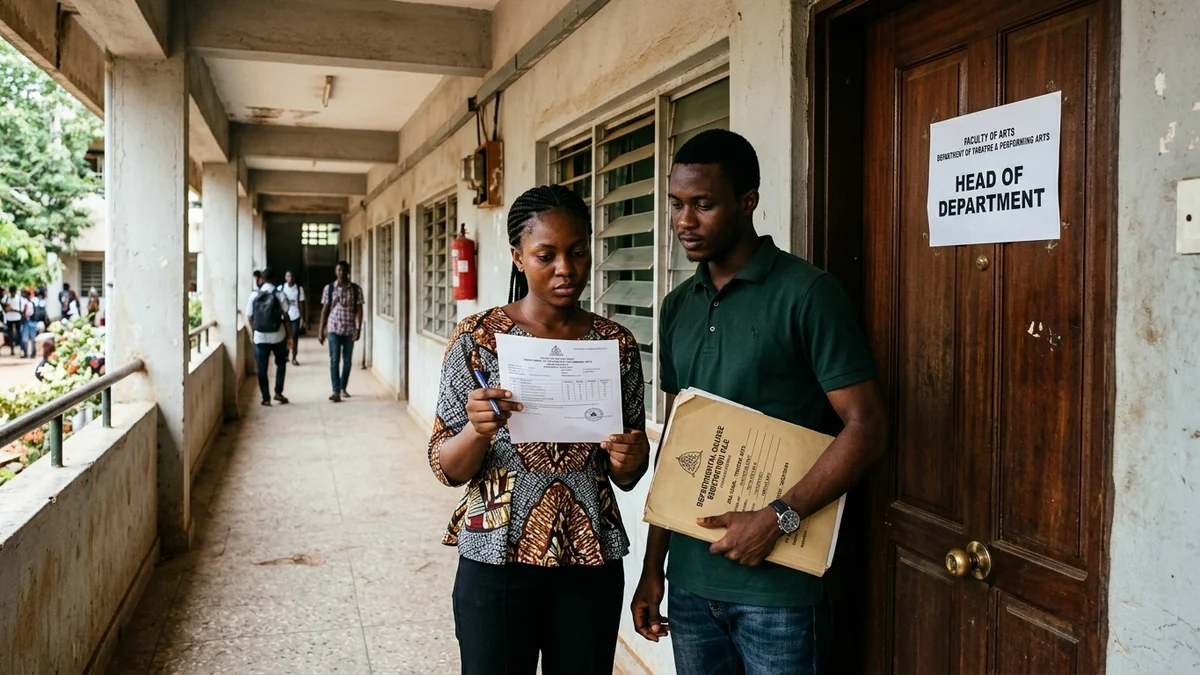
You walk up to your faculty notice board or log into your student portal with your heart thumping against your ribs.
You prepared for this course for four solid months. You attended every 8:00 AM lecture, submitted your term paper on time, scored high in the mid-semester test, and walked out of the three-hour examination hall confident of securing at least an 'A' or solid 'B'.
Then you see the published score next to your matriculation number: 42 (E) or F (Carryover).
Across the department, coursemates who skipped classes or begged for your assignment answers received 'B's and 'A's. You feel an immediate, suffocating surge of rage, bewilderment, and betrayal.
The immediate temptation is to react emotionally: burst into the lecturer’s staff room, storm the Head of Department’s office shouting about victimization, or post angry rants across university WhatsApp groups.
Stop. Do not burn your degree on an emotional impulse.
Academic evaluation in tertiary institutions is governed by strict administrative hierarchies. While student victimization and subjective bias are real campus realities, higher education research published in the International Journal of Educational Management reveals that between 15% and 20% of appealed university grading discrepancies are actually administrative clerical errors—transposed matriculation numbers, missing Continuous Assessment (CA) spreadsheets, or simple addition mistakes on script face-sheets.
If you suspect unfair grading, you need a calm, strategic, and evidence-backed roadmap. Here is what you can actually do to investigate your grade, protect your CGPA, and navigate the institutional grievance machinery without destroying your academic career.
1. The Immediate Audit: Dissecting Collation Errors vs. Subjective Bias
Before accusing a university lecturer of intentional malice or victimization, you must determine where the score actually broke down.
A standard 100-point course mark in Nigerian universities operating under the National Universities Commission (NUC) guidelines consists of two separate components:
- **Continuous Assessment (CA):** 30% to 40% (attendance, quizzes, assignments, midterm tests, or laboratory reports).
- **Semester Examination:** 60% to 70% (final written paper).
💡 **Key Formula:** *Total Course Score = Continuous Assessment (30–40 Marks) + Final Examination (60–70 Marks)*
The Missing CA Phenomenon
When departmental exam officers collate hundreds of student records across large lecture cohorts, spreadsheet misalignments frequently occur. If a lecturer or graduate assistant misplaced your 30-mark CA submission, you might enter the final grading sheet with a 0/30. Even if you scored an impressive 45/70 on the final exam paper, your total composite score will register as 45 (D).
Action Steps for the First 48 Hours:
- **Consult your Departmental Course Representative:** Ask if other coursemates experienced missing CA scores or anomalous grading trends in the same course.
- **Retrieve your CA Proof:** Gather your physical test booklets, stamped assignment receipts, lab sign-in sheets, or digital submission confirmation emails.
- **Check the Raw Broad-Sheet:** If your department pins the itemized broad-sheet (showing separate CA and exam breakdown columns), verify whether your CA column is blank or marked "ABS" (Absent).
If your poor grade resulted from missed syllabus continuity due to university shutdowns, review our blueprint on recovering from academic disruptions and momentum loss.
2. The Diplomatic Resolution: Approaching Your Course Level Adviser
Never bypass administrative levels. The greatest blunder an undergraduate can make is escalating a grievance directly to the Dean of Faculty or Vice Chancellor before engaging their departmental Course Adviser.
Your Course Level Adviser is a faculty member assigned specifically to guide your cohort’s academic progression and handle transcript audits.
How to Request an Informal Grade Audit:
- **Request a Private Office Meeting:** Approach your Level Adviser during scheduled consultation hours. Maintain a calm, respectful, and inquisitive posture.
- **Frame the Issue as an "Omission Inquiry":** Never open with *"Dr. X failed me unfairly."* Instead, use disarming, professional language:
- **Present Documented Evidence:** Place your graded CA script or test records neatly on the desk.
*"Good morning, sir/ma. I noticed an unexpected discrepancy in my final score for [Course Code]. Based on my recorded continuous assessment of 24/30, I suspect my test score might not have been captured during final spreadsheet collation. Could you kindly help me verify the broad-sheet breakdown?"*
If the discrepancy is a computational error or missing CA score, the course lecturer can submit an official "Amendment of Result Form" directly to the Head of Department (HOD) without any punitive Senate inquiries.
3. The Institutional Escalation: The Official Senate Script Remarking Protocol
What happens if your CA was properly entered, but you have undeniable reason to believe your exam paper was graded with extreme personal bias, malicious intent, or vindictiveness?
Under the Senate Academic Regulations of Nigerian public and private universities, every student possesses a statutory right to petition for a Formal Re-assessment of Examination Scripts.
- Written Petition to Dean via HOD] ➔ [Escrow Remarking Fee] ➔ [External Examiner Review] ➔ [Senate Ratification
The 4 Mandatory Rules of Formal Script Remarking:
| Institutional Step | Administrative Requirement | Operational Reality |
|---|---|---|
| 1. Statutory Time Window | Within 14 to 30 days of official result release | Late submissions are dismissed outright without review |
| 2. Formal Written Petition | Addressed to the Dean through the HOD | Must state objective academic grounds (not emotional accusations) |
| 3. Administrative Escrow Fee | ₦5,000 to ₦25,000 per paper paid to Bursary/TSA | Fully refunded if your score increases by a designated threshold |
| 4. Blind Re-evaluation | Script re-marked by an independent examiner | Original lecturer’s ink markings are often masked or re-transcribed |
The Realities of Independent Remarking Panels
Once your application is approved by the Faculty Board of Studies, the Dean assigns your script to an independent assessor—either an external moderator from another university or a senior departmental professor who did not teach the course.
The panel marks your answers against the official departmental marking guide. If your raw mark improves (for example, rising from 38% to 62%), the amended score is submitted to the University Senate for official ratification, and your administrative deposit is returned.
However, be warned: Remarking is a double-edged sword. If the independent examiner awards you a lower mark than the original lecturer, Senate regulations dictate that the new lower score stands as your official grade.
If you are experiencing intense emotional strain or dread dealing with hostile academic staff, read our guide on coping with lecturer intimidation and campus mental health.
4. Calculating the Strategic Risk: When to Fight vs. When to Retake
While the legal right to challenge an unfair grade exists, you must weigh the strategic cost-benefit ratio before pulling the institutional trigger.
In high-stakes academic departments like Law, Medicine, and Engineering, departmental faculties are tightly knit communities. Challenging a senior lecturer or professor can sometimes generate subtle academic friction in subsequent semesters.
Ask Yourself These 4 Strategic Questions:
- **How much does this single grade impact your cumulative standing?** If you have 35 units completed with a 4.20 CGPA, a single controversial 'C' or 'D' in a 2-unit course will not destroy your degree class.
- **Are you dealing with an objective or subjective subject?** In numerical courses (such as Calculus, Fluid Mechanics, or Quantitative Chemistry), calculations have definitive right or wrong answers. Proving unfair marking in analytical courses is vastly simpler than in subjective essay-based humanities disciplines. If you are struggling with heavy quantitative courses, deploy our system on [cracking difficult engineering and analytical courses](/blog/academics/engineering-student-study-method/).
- **Do you possess solid documentary proof?** If you have no copy of your CA score, no notes from the marking scheme, and rely solely on your memory of what you wrote three months ago, your petition will fail.
- **Is retaking the course more efficient?** If the course is offered in the next semester and your department allows grade replacement or carryover clearing without stigma, registering the paper and scoring an effortless 'A' under a neutral lecturer may save months of administrative warfare.
Action Checklist for Challenging Disputed Grades
Follow this systematic checklist when dealing with suspected grading anomalies:
- **Collect your Continuous Assessment evidence within 48 hours:** Retrieve tests, term papers, and laboratory attendance cards.
- **Inspect the departmental broad-sheet:** Confirm whether your CA score was captured or recorded as absent.
- **Book a private session with your Course Level Adviser:** Frame the matter politely as a potential clerical omission.
- **Consult the University Student Handbook:** Review your institution’s exact Senate provisions and deadlines for script re-assessment.
- **Evaluate the evidence objectively:** If proceeding with a formal petition, write a concise, respectful letter to the Dean routed through the HOD.
Connect with Ambitious, Informed Undergraduates
Navigating university administrative hurdles, departmental friction, and high-stakes examination grading is far easier when you have access to experienced peers and academic mentors across Nigerian campuses.
Join the Academic Comeback Network
A high-accountability WhatsApp community of ambitious Nigerian undergraduates across federal and state universities sharing verified academic strategy, administrative guidance, and exam comeback frameworks.
- Academic Rights & Policy Guidance — Learn how university Senate guidelines protect your grades and transcripts
- Peer Mentorship Across Faculties — Connect with senior students who have successfully navigated tough departmental hurdles
- Live Academic Strategy Sessions — Weekly discussions on CGPA recovery, CA optimization, and exam mastery
Frequently Asked Questions
Can a Nigerian university student legally request an exam script remarking?
Yes. Every university accredited by the National Universities Commission (NUC) has a Senate-approved Academic Regulations Handbook that provides a legal, institutional framework for students to apply for official examination script remarking through their Head of Department (HOD) and Dean of Faculty.
How much does it cost to apply for an official script remark in Nigeria?
Administrative remarking fees generally range from ₦5,000 to ₦25,000 per course, paid into the university's official Treasury Single Account (TSA) or bursary. In most Senate guidelines, if the independent remarking panel confirms an error and elevates your grade, this administrative fee is fully refunded.
What is the official deadline to challenge an unfair exam grade?
Most Nigerian university Senate statutes enforce a strict limitation window of 14 to 30 days from the official publication or online portal release of semester examination results. Petitions filed after this statutory window are routinely rejected.
What is the difference between a collation error and subjective grading bias?
A collation error is an objective administrative mistake—such as missing Continuous Assessment (CA) scores, addition errors on the script cover, or transposed matriculation numbers. Subjective bias involves harsh rubric interpretation. Collation errors can usually be fixed informally within 72 hours through your Course Adviser without filing a high-stakes Senate petition.
What Did You Like Most About This Guide?
Share your favorite takeaway, a study technique you tested, or ask a question.