
TDB All-Nighters vs 5-Hour Sleep: Exam Memory Impact
Should you pull a Till Daybreak (TDB) all-nighter or sleep for 5 hours before exams? Scientific comparison of sleep deprivation vs exam memory recall in Nigeria.

TDB All-Nighters vs 5-Hour Sleep: Exam Memory Impact
It is 2:15 AM on the morning of your 3-unit departmental core examination.
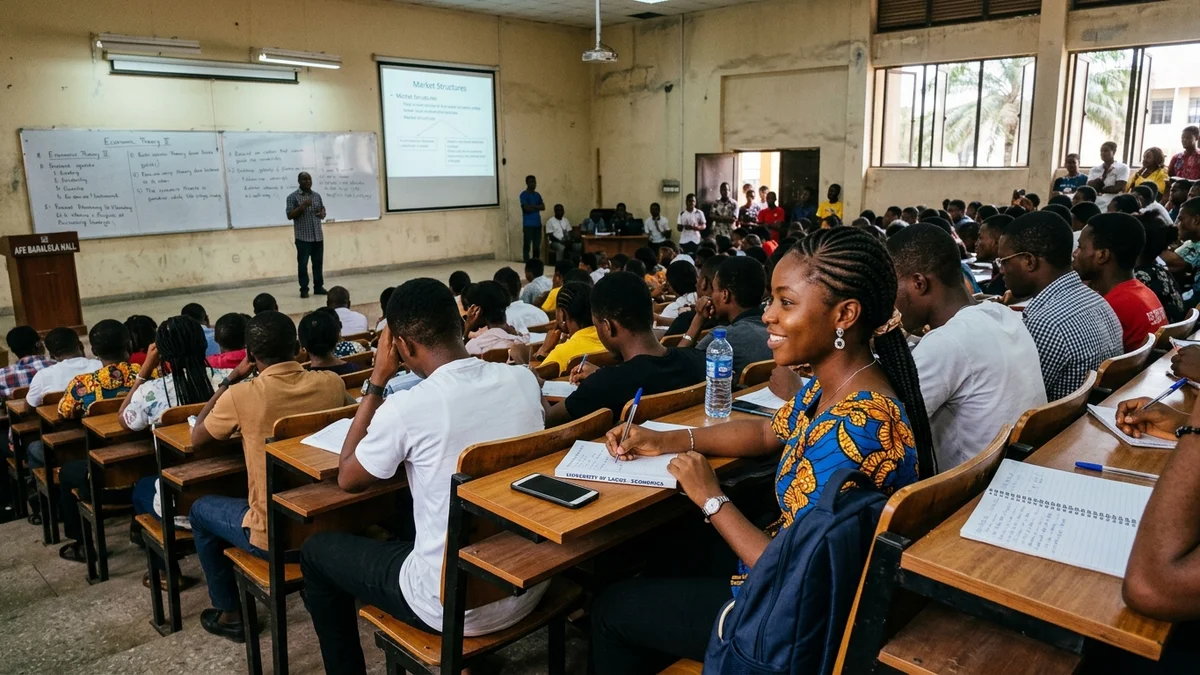
Outside your hostel, campus night classes are glowing with fluorescent lights. Inside the unventilated lecture halls, hundreds of students are packed together on hard wooden benches, chewing kolanuts, drinking dry Nescafe powder mixed with energy drinks, and chanting mnemonics into the humid night air.
This is the holy grail of Nigerian campus exam preparation: Till Daybreak (TDB).
In your hostel room, you are faced with a desperate, high-stakes decision:
- **Option A:** Stay awake all night, chug another mug of black coffee, read until 7:30 AM, and walk straight into the 8:00 AM examination hall with your eyes burning.
- **Option B:** Close your books right now, accept that you haven't covered every topic, and sleep for five solid hours.
Every semester, undergraduates convince themselves that pulling a TDB is a badge of academic honor. They believe that cramming for eight continuous overnight hours maximizes short-term recall.
Scientific neurobiology tells an entirely different story.
Educational and cognitive neuroscience research published in Nature Reviews Neuroscience and Science proves that pulling an all-nighter before an exam is the cognitive equivalent of arriving at an athletic marathon with a broken ankle.
Here is the empirical, scientific breakdown of what actually happens to your brain during a TDB all-nighter versus a 5-hour sleep cycle, and which choice guarantees higher exam scores.
1. The Neurobiology of Memory: Why Sleeping IS Studying
To understand why all-nighters fail, you must understand how human memory works:
| Sleep / Memory Stage | Biological Process | Academic Exam Benefit |
|---|---|---|
| Stage 1: Daytime Study | Facts and formulas temporarily cached in the hippocampus (short-term neural RAM) | Fragile, volatile memory prone to rapid decay within 12 hours |
| Stage 2: Slow-Wave Sleep (NREM) | Neural replay transfers data from hippocampus to neocortex (long-term hard drive) | Solidifies precise dates, formulas, definitions, and step-by-step calculations |
| Stage 3: REM Sleep | Brain synthesizes cross-concept patterns and associative mental models | Enables high-level problem-solving, critical essay framing, and novel exam application |
The Hippocampal Bottleneck:
During the day, newly learned formulas, legal cases, and anatomical names are stored in your hippocampus—the brain's temporary short-term memory buffer. The hippocampus has extremely limited storage capacity.
When you stay awake all night reading, your hippocampus becomes saturated. After four hours of continuous massed reading, it stops encoding new information. You are physically staring at pages, but your brain is no longer recording data.
The Sleep Transfer Window:
During Slow-Wave Deep Sleep (NREM), your brain replays the day’s learning at 10x speed, transferring facts from the temporary hippocampus into the permanent neocortex.
If you do not sleep, this transfer never occurs. When you pull an all-nighter, the information remains in fragile temporary storage, where it evaporates under the slightest stress.
To build study habits that retain facts permanently without resorting to all-nighters, deploy the strategies in our active recall study method guide.
2. Head-to-Head Comparison: TDB vs. 5 Hours of Sleep
| Performance Variable | The TDB All-Nighter (0 Hours Sleep) | The Strategic Sleep Protocol (5 Hours Sleep) |
|---|---|---|
| Syllabus Coverage | Covers 15% more raw pages | Covers fewer pages, but masters core 80/20 |
| Hippocampal Retrieval Strength | Suppressed by 40% (Severe memory loss) | Retains 85% of reviewed concepts |
| Working Memory & Calculation Speed | Sluggish, prone to sign and arithmetic slips | Sharp, fast algebraic manipulation |
| Emotional Composure Under Pressure | Hyper-reactive amygdala (Extreme panic risk) | Prefrontal cortex intact (Calm under stress) |
| Exam Hall Blankout Risk | Extremely High (Over 65%) | Minimal (Below 10%) |
The "Exam Hall Blankout" Phenomenon:
Have you ever sat down in an exam hall, turned over the question paper, and felt your mind go completely white?
That is not bad luck; it is adenosine toxicity.
During prolonged wakefulness, a chemical called adenosine accumulates in your prefrontal cortex. When paired with high cortisol (exam stress), the prefrontal cortex shuts down, causing complete cognitive blanking.
To understand the physiological mechanisms behind exam paralysis, read preventing exam panic and blackouts.
3. The 5-Hour Sleep Architecture: The 3-Cycle Rule
If it is already 1:00 AM and you still have unread coursework, do not attempt to sleep for eight hours.
Deploy the 3-Cycle Sleep Protocol:
Human sleep progresses in 90-minute ultradian cycles:
- 1 Cycle = 90 Minutes
- 2 Cycles = 3 Hours
- **3 Full Cycles = 4.5 Hours (+ 30 Mins Falling Asleep Buffer = 5 Hours)**
Why 5 Hours Works:
Waking up in the middle of a deep sleep cycle (e.g., after 2 hours or 3.5 hours) leaves you with severe sleep inertia—feeling groggy, disoriented, and nauseated.
Completing exactly three full 90-minute sleep cycles ensures that your brain finishes its slow-wave memory consolidation and wakes up naturally during light sleep, leaving you alert, sharp, and composed.
Chronic sleeplessness over an entire semester leads to profound physical and mental exhaustion; learn how to identify the signs in academic burnout and study paralysis symptoms.
4. The 80/20 Emergency Midnight Triage Protocol
If you have only six hours remaining before your exam and half the syllabus is unread, execute this exact emergency protocol:
- **1:** 00 AM – 3:00 AM: Closed-Book Past Question Sprint] ➔ [3:00 AM – 8:00 AM: Mandatory 5-Hour Sleep
- **Stop Reading Handouts Chronologically:** Do not open chapter 1.
- **Pull 3 Recurrent Past Exam Questions:** Spend 120 minutes actively practicing the solutions to the three highest-probability calculation derivations or essay prompts.
- **Shut Down All Screens at 3:00 AM:** Drink a glass of water, put your phone in another room, and sleep for five hours.
- **Wake Up at 8:00 AM Refreshed:** Eat a light protein-rich breakfast, review your 1-page formula sheet for 15 minutes, and walk calmly into the hall.
You will consistently outperform coursemates who stayed up until daybreak.
The Pre-Exam Sleep Checklist
Follow this scientific routine the night before every major examination:
- **Establish a hard shutdown time:** Cease all new learning by 1:00 AM at the latest.
- **Enforce the 5-hour sleep floor:** Never sit an examination on less than 4.5 to 5 hours of rest.
- **Ditch caffeine past midnight:** Energy drinks elevate resting heart rate and prevent deep slow-wave memory consolidation.
- **Prioritize 80/20 past questions:** Focus only on recurrent high-yield topics before sleeping.
- **Wake up at the end of a 90-minute sleep cycle:** Avoid grogginess by timing your sleep in 1.5-hour increments.
Master Exam Strategy & Outsmart Hall Panic
High academic performance is not about torturing your body with sleepless nights; it is about deploying an engineered cognitive study system that produces maximum results with minimum friction.
The Academic Comeback Package
A complete 7-part digital system created specifically for Nigerian university students ready to eliminate exam anxiety, replace all-nighters with smart pacing, and secure top-tier results.
- Exam Survival Guide — Pacing blueprints, emergency triage schedules, and panic neutralizers
- How to Score High in Any Exam — Reverse-engineer marking schemes and maximize method marks
- Focus Template — Maximize daytime study retention and eliminate the need for desperate all-nighters
Frequently Asked Questions
Why do Nigerian students pull Till Daybreak (TDB) all-nighters before exams?
Students pull TDB out of panic and syllabus procrastination, believing that spending 8 continuous hours reading overnight maximizes information retention right before stepping into the exam hall.
What happens to the brain during a sleepless all-nighter?
Neuroimaging research proves that total sleep deprivation impairs hippocampal memory consolidation by up to 40%, suppresses working memory speed, and hyper-activates the amygdala, making students vulnerable to severe exam-hall panic.
Is 5 hours of sleep really enough before a tough university examination?
While 7 to 8 hours is optimal, 5 hours of sleep allows your brain to complete at least three full 90-minute sleep cycles (NREM slow-wave and REM sleep), stabilizing newly learned facts and protecting against cognitive blanking.
What should you do if you only have 6 hours left before an exam and haven't finished reading?
Deploy the 80/20 Emergency Triage: spend 2 hours actively testing yourself on recurrent past exam questions, then enforce a mandatory 4 hours of sleep. You will score significantly higher than staying awake for all 6 hours.
What Did You Like Most About This Guide?
Share your favorite takeaway, a study technique you tested, or ask a question.