
Resuming After Long Strike: 7-Day Brain Reactivation
Returning to university after a prolonged ASUU strike or campus closure? Follow this 7-day cognitive reactivation schedule to rebuild study momentum.

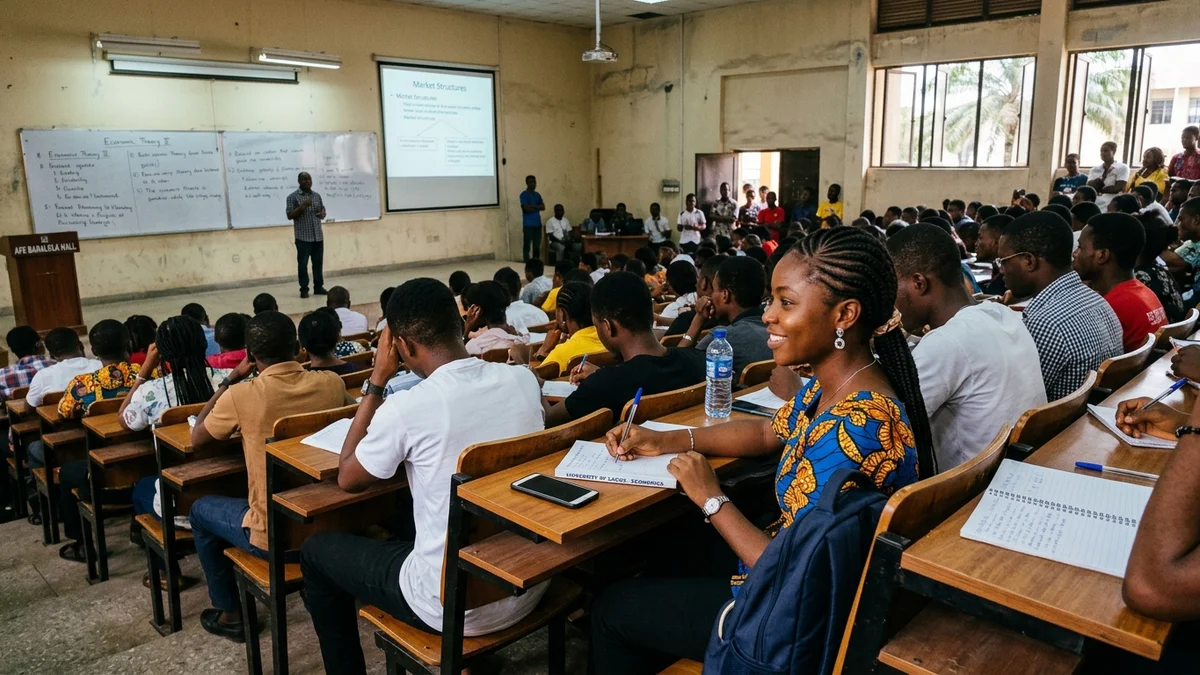
Resuming After Long Strike: 7-Day Brain Reactivation
The official memorandum from the university registrar has just dropped on your department's Telegram and WhatsApp groups.
After an eight-month Academic Staff Union of Universities (ASUU) strike or prolonged state university shutdown, the gates are reopening. Lectures resume next Monday, and the revised academic calendar indicates that first-semester examinations begin in exactly three weeks.
You walk into your bedroom, pull open your metal study box, and pull out your course notebooks.
As you flip through the pages of Advanced Calculus, Legal Drafting, or Organic Chemistry, a wave of profound disconnection hits you. The handwriting is yours, but the concepts feel completely alien. Formulas you could derive in your sleep eight months ago now look like hieroglyphics. When you try to sit down and read for thirty minutes, your mind drifts, your eyes glaze over, and you find yourself checking social media.
You are experiencing Post-Disruption Cognitive Inertia.
According to educational neuroscience research published in Frontiers in Psychology, prolonged disuse of complex cognitive skills induces neural synaptic pruning and working memory atrophy. When a university student suddenly transitions from eight months of casual freelance work, gaming, or trade apprenticeships back into rigorous academic analysis, the central nervous system resists the strain.
Attempting to force yourself to study for ten hours on Day 1 will only produce severe mental exhaustion, leading to emotional defeatism.
Instead, you need an engineered 7-Day Brain Reactivation Protocol to reboot your intellectual stamina, reactivate your working memory, and prepare for rapid post-strike examinations.
1. The Compressed Calendar Trap: Why Normal Studying Fails Post-Strike
When Nigerian universities resume after prolonged industrial actions, university Senates face intense accreditation deadlines.
They do not give you a gentle transition:
- **The 3-Week Exam Crush:** Lecturers who completed only 40% of their course outlines before the strike will rush through the remaining 60% in ten days or simply distribute 150-page handouts with the instruction: *"Read chapters 5 through 12 on your own; exam is next week."*
- **The Instant CA Test:** Departmental heads frequently conduct unannounced Continuous Assessment tests within 72 hours of resumption to fulfill statutory NUC marks.
If you waited for the strike to be officially called off before opening your books, read our analysis on recovering from academic disruptions and momentum loss.
2. The 7-Day Brain Reactivation Blueprint
Reactivating your cognitive faculties is like returning to weightlifting after an injury: you must use progressive cognitive overload.
- **Days 1–2:** Low-Friction Organization] ➔ [Days 3–4: Active Retrieval Drills] ➔ [Days 5–7: High-Intensity Past Questions
Day 1 & Day 2: The Environmental & Syllabus Audit (90 Mins Daily)
- **Goal:** Zero heavy studying. Your only mission is physical and digital organization.
- **Triage the Battlefield:** Locate all course handouts, syllabuses, and lab manuals. Separate them into individual folders for each registered course.
- **The Course Rep Alignment:** Contact your departmental course representative. Confirm which lecturers have updated their course materials or modified the exam format.
- **Audit the Pre-Strike Boundary:** Mark the exact page where each lecturer stopped lecturing before the campus shutdown.
Day 3 & Day 4: Low-Stakes Closed-Book Blurting (2 Hours Daily)
- **Ditch All Re-Reading:** Do not attempt to read 80 pages chronologically.
- **Deploy the 20-Minute Blurting Drill:** Pick a topic you understood well before the strike. Read the core summary for 15 minutes. Close the book completely. On a blank sheet of paper, write down everything you remember: definitions, formulas, flowcharts.
- **Reactivate Neural Pathways:** Comparing what you wrote against the handout rebuilds dormant neural associations 300% faster than passive re-reading.
Day 5 & Day 6: The 5-Year Past Question Funnel (3 Hours Daily)
- **Reverse-Engineer the Exam:** Open past exam papers from the last five academic sessions.
- **Identify Recurrent 80/20 Questions:** Map the questions that reappear regardless of strikes. In Nigerian federal universities, lecturers under time pressure almost always recycle questions from past departmental papers.
- **Timed Problem Solving:** Solve two past exam questions completely under closed-book conditions with a timer.
Day 7: The Full Simulation & Timetable Consolidation
- Simulate one full 2-hour mock exam paper under authentic examination conditions.
- Lock in your daily study routine for the upcoming semester revision weeks.
If the sudden pressure of an impending exam timetable triggers severe anxiety or panic, apply our tactical damage-control framework in 14-day emergency exam cramming plan.
3. The 3 Physical Levers of Cognitive Reactivation
You cannot separate brain performance from physical biochemistry:
- **Hydration and Electrolytes:** Dehydration reduces cognitive processing speed by up to 15%. Keep a bottle of water on your desk and hydrate consistently.
- **The 20-Minute Dopamine Fast:** If you spent months scrolling TikTok, Instagram, or gaming for eight hours a day, your dopamine baseline is dysregulated. When you sit down to read, normal text feels painfully boring. Enforce a strict rule: **No phone in the study room for the first 60 minutes of each study block.**
- **The Sleep Foundation:** Sleep is non-negotiable. Slow-wave sleep consolidates newly reactivated memories into long-term neocortical structures. Guard 7 hours of sleep every night.
If the stress of resuming after a long break causes an unexpected drop in your academic confidence, explore our psychological strategies in overcoming emotional paralysis after semester GPA drop.
7-Day Reactivation Checklist
Follow this systematic schedule starting today:
- **Days 1–2:** Organize physical folders and audit course syllabuses with course reps.
- **Days 3–4:** Practice 20-minute closed-book blurting drills on foundational topics.
- **Days 5–6:** Solve recurrent 5-year past examination questions on blank paper.
- **Day 7:** Complete one full timed 2-hour mock paper to lock in exam pacing.
- **Enforce digital boundaries:** Put your smartphone on airplane mode during every 50-minute study sprint.
Rebuild Your Academic Dominance Post-Strike
Returning to school after an industrial shutdown is disorienting, but students who deploy an engineered recovery system outperform peers who wait for motivation.
The Academic Comeback Package
The complete 7-part digital system created specifically for Nigerian university students ready to eliminate post-strike academic inertia, master exam pacing, and secure top-tier GPAs.
- Exam Survival Guide — Emergency triage schedules, Continuous Assessment optimization, and pass formulas
- Get Good at Hard Things — The cognitive framework to master difficult calculations and complex theory
- 30-Day Study Tracker — Pre-built templates to organize post-strike revision sprints and mock exams
Frequently Asked Questions
Why is it so hard to read after a long university strike in Nigeria?
Prolonged academic disruptions cause neuro-cognitive inertia. Without daily intellectual stimulation, your brain de-conditions its working memory stamina and focus habits. Attempting to immediately study for 8 hours causes mental fatigue and cognitive resistance.
How many days does it take to rebuild study momentum after a strike?
Cognitive psychology research shows that a structured 7-day progressive overload protocol—starting with 45-minute active recall sprints and scaling to 3 focused hours—re-engages neural study pathways without triggering burnout.
What is the biggest mistake students make when campus resumes after a strike?
Assuming lecturers will spend weeks reviewing previous coursework. In reality, Nigerian university administrations compress remaining academic calendars, often scheduling revision and Continuous Assessment tests within 14 days of resumption.
How should I organize my notes when resuming mid-session?
Execute a 48-hour syllabus audit: consolidate pre-strike handouts, identify where each lecturer stopped, secure missing lecture slides from course reps, and map out upcoming CA test topics.
What Did You Like Most About This Guide?
Share your favorite takeaway, a study technique you tested, or ask a question.