
ASUU Strike Disruptions: Rebuilding Academic Momentum
Survive ASUU strike academic momentum loss. Discover why long university shutdowns drain focus and how to reactivate your mind before emergency resumptions.

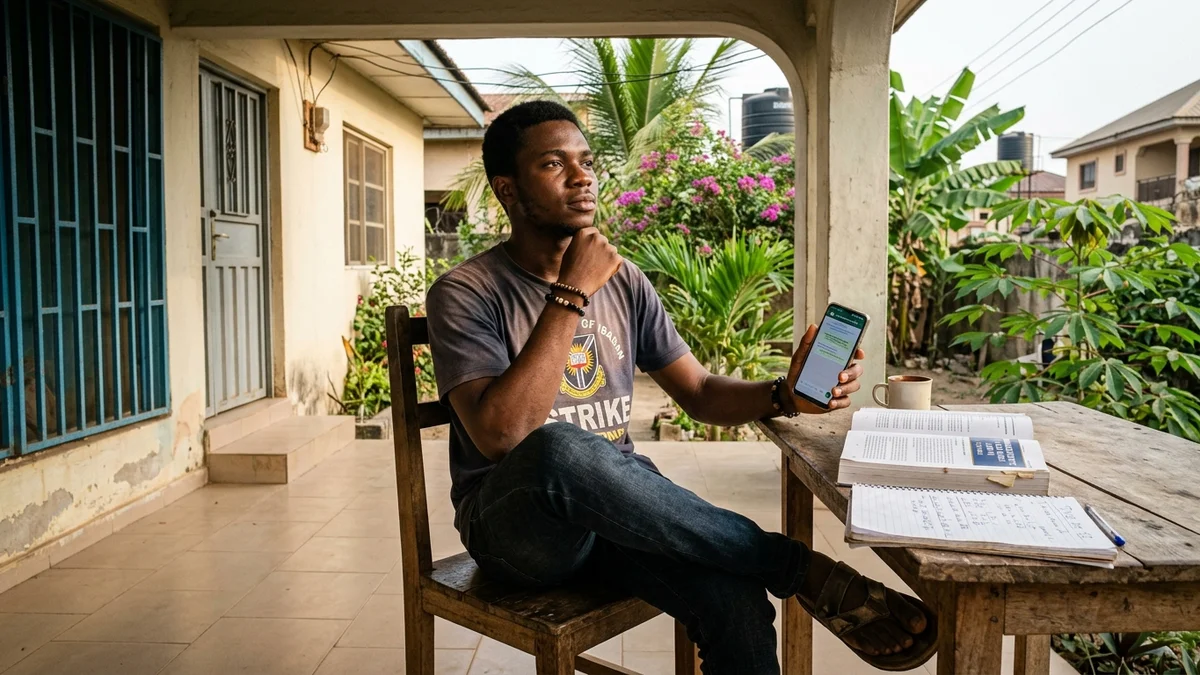
It is one of the most frustrating experiences unique to Nigerian tertiary education. You spend months building rigorous study habits, mastering continuous assessments, and preparing for mid-semester tests. Your academic momentum is at an all-time high.
Then, breaking news alerts flood campus WhatsApp groups and national media: the Academic Staff Union of Universities (ASUU) or local institutional unions have declared an indefinite, comprehensive strike action.
Within 48 hours, hostel porters order students to evacuate. You pack your bags, shove stapled lecture handouts into a dusty Ghana-Must-Go sack, and travel back to your parents’ house. Initially, the break feels like a welcome relief. But as weeks turn into months, days begin to blur together.
Your books sit unopened on your bedroom desk. You take up graphic design, start a trade, or work a retail job. Then, out of nowhere, another midnight bulletin drops: "Strike Suspended: Academic Activities Resume Next Monday, First Semester Exams Commence in Two Weeks."
A wave of collective panic paralyzes the national student body. You open your syllabus, and your mind feels completely rusty. You cannot recall basic formulas, let alone complex derivations.
This is the hidden crisis of ASUU strike academic momentum loss. Between 1999 and 2022, the Academic Staff Union of Universities (ASUU) embarked on 16 major national strikes, resulting in a cumulative loss of over 54 months—nearly 4.7 years—of academic time across Nigerian public tertiary institutions..
When university shutdowns drag on, the damage is not just lost time on the calendar; it is the total decay of your cognitive conditioning. Understanding how to manage this disruption protects your mental health, your skills, and your degree classification.
1. The Physics of Academic Inertia: Why the Brain Resists Inactivity
Isaac Newton’s First Law of Motion states that an object at rest tends to stay at rest unless acted upon by an external force. Human psychology operates on the exact same principle: Cognitive Inertia.
When you are actively on campus, external friction keeps your mind sharp:
- You walk past faculty notice boards displaying test dates.
- You see coursemates carrying textbooks to the departmental library.
- You sit through 8:00 AM lectures that demand immediate mental attention.
These environmental cues provide an external scaffolding that compels you to study.
When a strike removes that scaffolding, your brain naturally downregulates academic alertness to conserve metabolic energy. The longer you go without reading, the higher the psychological resistance becomes to open a book. Reading a single chapter after four months of total detachment feels physically exhausting, triggering feelings of inadequacy and coping with stalled graduation depression.
2. The Danger of Total Detachment: The Emergency Resumption Ambush
The single biggest mistake Nigerian undergraduates make during strike actions is adopting an "All-or-Nothing" Mindset.
Students tell themselves: "Since no one knows when the strike will end, there is no point in studying now. When ASUU calls off the strike, I will start reading seriously."
Here is why that strategy leads directly to academic catastrophe:
- **Compressed Senate Calendars:** University administrative Senates do not extend the school year by the full duration of a strike. To catch up with missed academic sessions, they compress 14-week semesters into 4-week crash programs.
- **The 14-Day Exam Ambush:** It is common for faculties to resume on a Monday, conduct rapid revision lectures for five days, and begin degree examinations on the second Monday.
- **Cognitive Overload:** You cannot rebuild four months of forgotten calculus, pathology, commercial law, or organic chemistry in 10 sleepless nights without triggering an exam blackout.
Students who completely detach from their academics during strikes frequently record their lowest semester GPAs immediately following resumption.
3. The Minimum Effective Dose (MED) Protocol for Campus Shutdowns
You do not need to study 6 hours a day during a strike. Attempting to maintain an intense exam-week schedule while living at home without academic urgency is unrealistic and unsustainable.
Instead, deploy the Minimum Effective Dose (MED) framework:
$$\text{Minimum Effective Dose} = \text{45 Minutes} \times \text{3 Days Per Week}$$
How the MED Protocol Works
- **Pick Two Heavy-Credit Core Courses:** Ignore light 1-unit electives during the strike. Focus exclusively on the two most difficult 3-unit or 4-unit departmental core courses that dictate your GPA.
- **Run Closed-Book Past Question Drills:** Do not passively reread handouts. Take one past exam question every Monday, Wednesday, and Friday. Spend 30 minutes solving it closed-book, and 15 minutes reviewing what you missed.
- **Keep the Neural Wiring Alive:** Those 45 minutes of weekly friction do not guarantee an instant 'A', but they keep your memory retrieval pathways alive. When sudden resumption is declared, your brain requires only 48 hours to return to peak form, rather than weeks of agonizing struggle.
When the call-off bulletin finally drops, execute our structured 7-day brain reactivation after strike to outpace unprepared coursemates.
4. Balancing Side Hustles Without Sacrificing Academic Identity
A long strike provides an undeniable opportunity to gain financial independence, learn high-income digital skills, or build a business. With high inflation and unpredictable graduation dates, learning a practical trade is essential.
However, many students make the mistake of allowing their hustle to completely consume their identity:
- They work 14 hours a day on freelance gigs or retail jobs.
- They stop identifying as students and begin viewing university education as an inconvenient nuisance.
- When resumption arrives, they face agonizing conflict between ongoing client commitments and compulsory 8:00 AM practicals.
Protect your long-term prospects by freelancing during campus strikes without losing focus. By establishing clear working hours and maintaining your weekly MED study block, you ensure that your side hustle supplements your future without sabotaging your degree.
5. Your Strike Survival and Momentum Checklist
Stay mentally resilient and academically prepared throughout any institutional delay with this 4-point protocol:
- **Digitize your core handouts immediately:** Never leave your only study materials in a locked hostel room. Take clear smartphone photos or scans of your course outlines and past exam papers so they are always accessible on your Google Drive.
- **Lock in your 45-minute study slot:** Pick three days a week (e.g., Monday, Wednesday, Friday at 8:00 AM) dedicated exclusively to solving past examination problems before your daily hustle begins.
- **Stay connected to serious coursemates:** Create a 3-person WhatsApp check-in group with academic colleagues who share your GPA goals, rather than dwelling on cynical campus rumor channels.
- **Track your cognitive baseline:** Test yourself monthly on foundational concepts to verify that you haven't forgotten the core principles of your major courses.
Stay Connected and Keep Your Academic Edge Sharp
Surviving the unpredictable disruptions of the Nigerian university system is nearly impossible in isolation. When strikes, timetable scrambles, and academic policy changes hit, having a community of focused, high-performing peers makes all the difference.
Join the Academic Comeback Network
A dedicated, distraction-free WhatsApp community of ambitious Nigerian undergraduates across federal and state universities sharing verified past questions, strike survival tactics, and daily study accountability.
- Peer Accountability Pods — Partner with serious students in your discipline to maintain your study momentum
- Curated Academic Resources — High-yield past questions, marking scheme breakdowns, and exam tips
- Direct Mentorship & Q&A — Regular voice rooms and guidance on navigating campus friction
Frequently Asked Questions
Why is it so hard to read during an ASUU strike or campus shutdown?
Because humans rely on institutional structure and immediate consequences to generate urgency. Without daily lectures, test deadlines, or visible coursemates, your brain perceives study materials as non-urgent, leading to severe cognitive inertia.
How can I maintain study habits when a strike lasts for several months?
Lower the bar to a minimum effective dose: commit to just 45 minutes of active reading three times a week. This maintains your neural retrieval circuits without causing burnout while you pursue side skills or work.
What happens when Nigerian universities announce sudden strike resumptions?
Senate committees almost always compress the academic calendar, often scheduling examinations within 10 to 14 days of resumption. Students who completely abandoned their books suffer catastrophic carryover waves.
Should I learn tech skills or get a job during an academic strike?
Yes, productive engagement preserves mental health and financial stability, provided you protect a non-negotiable weekly study window to prevent total academic detachment.
What Did You Like Most About This Guide?
Share your favorite takeaway, a study technique you tested, or ask a question.